
Restaurant Dessert Order: Portions, Allergens, Temperature, and Takeout
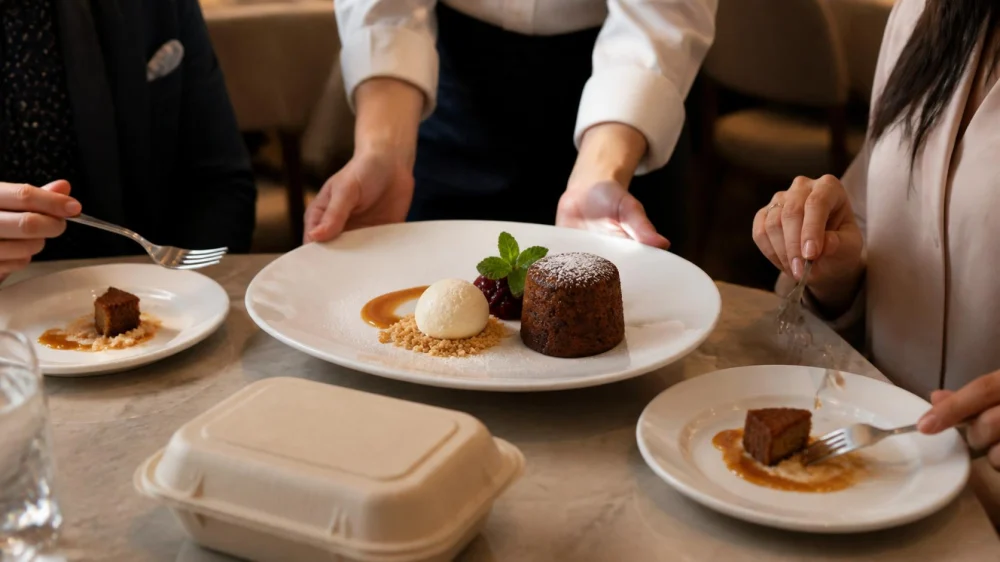
Restaurant desserts often combine several components: cake, mousse, ice cream, sauce, nuts, fruit, alcohol, or a hot filling. A menu name may not reveal portion size, temperature, preparation time, or allergens. Asking how the plate is built helps the table choose whether to share, order separately, or take something home.
Ask About Portion
Ask whether the dessert is individual, suitable for two, or designed for the table. Photographs can misrepresent scale. Consider richness and other courses rather than counting only pieces. One large dessert with several plates may suit a group, but individual portions reduce cross-contact and make dietary choices easier to keep separate.
Identify the Components
Have the server describe cake or pastry base, filling, frozen element, sauces, crumb, garnish, and decorative pieces. Some parts may be prepared in advance by another supplier. Ask what can be omitted and what is already assembled. Removing a garnish at the table does not remove contact or an ingredient baked into another component.
Discuss Allergens Before Ordering
Tell staff the specific allergy before dessert is entered and ask about every component, shared mixers, fryers, scoops, knives, storage, and plating surfaces. Desserts commonly combine milk, eggs, wheat, peanuts, tree nuts, soy, sesame, or other allergens. If the kitchen cannot provide suitable information or controls, choose a sealed labeled alternative or skip dessert.
Ask About Alcohol and Caffeine
Tiramisu, sauces, cakes, truffles, and flambéed items may contain alcohol, and coffee or chocolate can add caffeine. Cooking does not guarantee that all alcohol is removed. Ask about ingredients and portions when avoiding them for health, recovery, religion, pregnancy, medication, age, or preference. The restaurant should describe the product; individual medical decisions belong with a clinician.
Check Hot and Cold Elements
Molten fillings, brûléed sugar, skillets, and warmed plates can burn, while ice cream melts rapidly beside hot cake. Ask whether the plate or dish is hot and keep hands away from indicated areas. Test a small bite. Children need close supervision. Do not move a hot cast-iron or ceramic vessel by its handle without server direction.
Share With Clean Utensils
Request extra plates and a clean serving utensil before anyone tastes the dessert. Cut and portion once rather than passing bitten spoons around. Keep allergen-sensitive portions separate from the beginning; a clean spoon cannot undo contact on a shared plate. Use separate sauce containers where the restaurant can provide them safely.
Plan the Timing
Ask whether a soufflé, baked dessert, or tableside item needs advance ordering. Decide before the kitchen closes, not after the bill arrives. For a group, order coffee or tea so beverages and dessert arrive in a useful sequence. Tell the server if the table has a firm departure time instead of rushing a product that needs proper cooking.
Handle Celebrations Clearly
Confirm whether the restaurant permits an outside cake, charges a cutting fee, supplies candles, or offers a message. Discuss allergens and storage for both restaurant and outside desserts. Do not place sparklers or unapproved decorations in food. Give the correct name and spelling in writing, and tell staff privately if a surprise must avoid public singing or photography.
Choose Takeout Carefully
Some plated desserts do not travel: ice cream melts, crisp elements soften, and sauces leak. Ask which components can be packed separately and whether a sturdy chilled container is available. Make dessert the last pickup, carry it level, and keep hot and cold components apart. Do not leave a cream-filled or frozen dessert in a parked vehicle.
Store Leftovers Safely
Refrigerate perishable dessert promptly according to current food-safety guidance. Label the container and keep ingredient information. Freezing can change mousse, custard, fruit, and frosting texture, so ask the restaurant before freezing. Discard food with uncertain time and temperature history, damaged packaging, abnormal odour, or visible spoilage rather than tasting it.
Before the plate is cleared, decide whether leftovers are truly practical. Sauces may soak cake, ice cream cannot be boxed with pastry, and a dessert shared with used utensils may not suit later sharing. Ask for components to be packed in clean separate containers when available. Write the date and contents at home, and do not combine a fresh takeout dessert with older unidentified leftovers.
Keep the restaurant receipt and ingredient notes until the leftovers are finished.
A satisfying dessert order fits both the table and the dish. Confirm portion and components, disclose allergies, ask about alcohol and caffeine, respect hot plates, share with clean utensils, and choose only travel-friendly items for takeout. Clear questions preserve the final course instead of turning it into a last-minute problem.



 Hanco's4.0 (549 reviews)
 Vincent's4.0 (662 reviews)
 Burgerz0.0 (0 reviews)
 Q Grill | Korean BBQ & Seafood in Fort Lee, NJ4.0 (238 reviews)
 King3deli grocery4.0 (8 reviews)
 Tabare Williamsburg4.0 (1039 reviews)
 Exploring Middle Eastern Restaurants That Offer Interactive Dining Experiences
 How to Find the Best Dining Deals Near Me: Where to Eat Without Breaking the Bank
 Best Burger Joints with Truffle Fries Near Me: A Gourmet Twist on a Classic Meal
 How Breakfast Restaurants Are Offering Seasonal Dishes With Unique Ingredients
 Exploring Middle Eastern Restaurants That Feature Interactive Dining Experiences
 Discovering Breakfast Restaurants That Offer Innovative Brunch Combos