

Restaurant Menu Substitution: Confirm Price and Allergens
On this page
A restaurant menu substitution can be as simple as changing a side dish or as important as replacing an ingredient tied to an allergy. The change may affect price, portion, flavor, cooking time, nutrition, and cross-contact risk. Confirm the complete result rather than assuming that one swapped item leaves everything else the same.
Restaurants differ in recipes, kitchen layouts, supplier availability, and modification policies. Ask the server to verify uncertain details with the kitchen. A substitution is not guaranteed merely because another ingredient appears elsewhere on the menu, and a preference request should not be represented as a medical allergy.
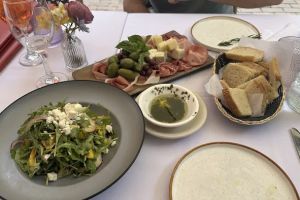
Sofia's of Little Italy / sofia's of little italy
New YorkNew York CountyNew York
143 Mulberry St, New York, NY 10013, USA
Understand why substitutions happen
A guest may request a substitution for taste, allergy, religious practice, dietary pattern, texture, portion, or availability. The restaurant may also substitute because a delivery is late, produce quality varies, equipment is unavailable, or a listed item has sold out.
Some dishes are assembled to order and easy to adjust. Others are prepared in batches, marinated in advance, or built around a fixed recipe. Ask what is possible without pressuring staff to promise a change the kitchen cannot execute safely or consistently.

Anita La Mamma del Gelato / anita's gelato
New YorkNew York CountyNew York
207 W 45th St, New York, NY 10036, USA
Ask before ordering
Identify the exact item you want removed and the preferred replacement. For example, ask whether a salad can use a named vegetable instead of cheese, or whether a side can change from fries to steamed vegetables. Avoid vague phrases such as “make it healthy” or “nothing bad.”
Confirm whether the substitution is available at the current meal and location. Ask if it changes the price, portion, preparation time, garnish, sauce, or included side. Repeat the final order so both you and the server hear the same version.
Describe allergies clearly
State the allergen directly and explain that it is an allergy. Ask whether the ingredient appears in the dish and whether the kitchen can manage cross-contact. Do not assume removing a visible topping removes an allergen from marinades, sauces, broth, breading, spice blends, or shared equipment.
If the restaurant cannot provide reliable information or safe preparation, choose another dish or restaurant. People with prescribed emergency medication should carry and use it according to their medical plan. Breathing difficulty, throat or facial swelling, faintness, or rapidly worsening symptoms requires emergency help.
Check the whole dish
A substituted main ingredient may still arrive with the original garnish, dressing, butter, cheese, crumbs, bread, or side. Ask the server to describe the final plate from base to topping. For a dietary restriction, verify cooking fats and finishing sauces as well as the obvious component.
Determine whether the replacement is itself seasoned, breaded, sweetened, or prepared with alcohol. A plain vegetable from one menu section may be cooked differently when used in another dish. Current kitchen confirmation is more reliable than an old online photo.
Confirm price and portion changes
Restaurants may charge for premium proteins, specialty sides, gluten-free products, extra ingredients, or labor-intensive modifications. Another swap may reduce the portion without reducing the price. Ask for the added charge or revised total before placing the order.
Check whether removing an ingredient creates a credit; often it does not. For a prix fixe, tasting menu, promotion, or coupon, substitutions may be limited or priced separately. Written menu notes and staff confirmation help prevent surprise at payment.
Consider cooking and texture
Ingredients do not always behave the same way. Replacing pasta, bread, cheese, egg, flour, or protein can change moisture, structure, browning, and timing. Ask whether the kitchen recommends a different dish that was designed for the desired ingredient instead of forcing a direct swap.
Alternative products may be cooked on shared grills, in shared fryers, or with common utensils. This may be acceptable for a preference but not for every allergy. Discuss the need specifically and make your choice based on the restaurant's actual process.
Handle sold-out items
When an item sells out, ask what component is unavailable and what the restaurant proposes. A different fish, cut of meat, vegetable, or dessert flavor may carry another price. You are not required to accept an unannounced material change.
Choose an alternative from the current menu after checking ingredients and cost. If the substitute is central to the dish, ask whether it will be identified on the check. Staff should communicate changes before preparation whenever practical.
Review the dish when it arrives
Listen as the server names the dish and modification. Look for the removed ingredient and ask before eating if anything appears uncertain. A small garnish can matter when the request concerns an allergy. Do not taste an unknown component to identify it.
If the plate is wrong, leave it intact and politely ask for the server or manager. Explain the confirmed substitution and whether the issue is preference, dietary practice, or allergy. For allergies, a kitchen may need to prepare a new dish rather than simply remove the visible item.
Manage takeout and delivery
Enter modifications in the designated order field and keep them short and specific. Call the restaurant when the request affects safety or the online system cannot show a price. Third-party delivery notes may reach the driver rather than the kitchen, so do not rely on them for ingredient instructions.
At pickup, compare the receipt and item labels with the order. Open containers enough to verify obvious components without contaminating food or delaying safe transport. Keep allergy-sensitive dishes separated and labeled for the correct person.
Respond to a problem
Raise an incorrect item while the restaurant has an opportunity to correct it. Provide the order number, dish, promised substitution, extra charge, and a clear description of the mismatch. Photograph the receipt and untouched dish when useful for a takeout report.
Focus on the requested remedy: corrected food, removal of an unauthorized charge, or a refund under the restaurant's policy. A service complaint and a suspected allergic reaction are different; urgent medical symptoms require care first, with records and follow-up handled afterward.
Substitution checklist
Before ordering, confirm the item removed, replacement added, entire final dish, allergens, cross-contact process, cooking method, portion, extra price, preparation time, and how the change will appear on the receipt. Repeat the order and verify it on arrival.
A good substitution is clearly understood by the guest, server, and kitchen. Specific language prevents many errors, while honest limits protect both diners and staff. When a direct swap does not work, selecting a dish already designed for the need is often the simplest and most satisfying choice.





 Hanco's4.0 (549 reviews)
 Vincent's4.0 (662 reviews)
 Burgerz0.0 (0 reviews)
 Q Grill | Korean BBQ & Seafood in Fort Lee, NJ4.0 (238 reviews)
 King3deli grocery4.0 (8 reviews)
 Tabare Williamsburg4.0 (1039 reviews)
 Exploring Middle Eastern Restaurants That Offer Interactive Dining Experiences
 How to Find the Best Dining Deals Near Me: Where to Eat Without Breaking the Bank
 Best Burger Joints with Truffle Fries Near Me: A Gourmet Twist on a Classic Meal
 How Breakfast Restaurants Are Offering Seasonal Dishes With Unique Ingredients
 Exploring Middle Eastern Restaurants That Feature Interactive Dining Experiences
 Discovering Breakfast Restaurants That Offer Innovative Brunch Combos