
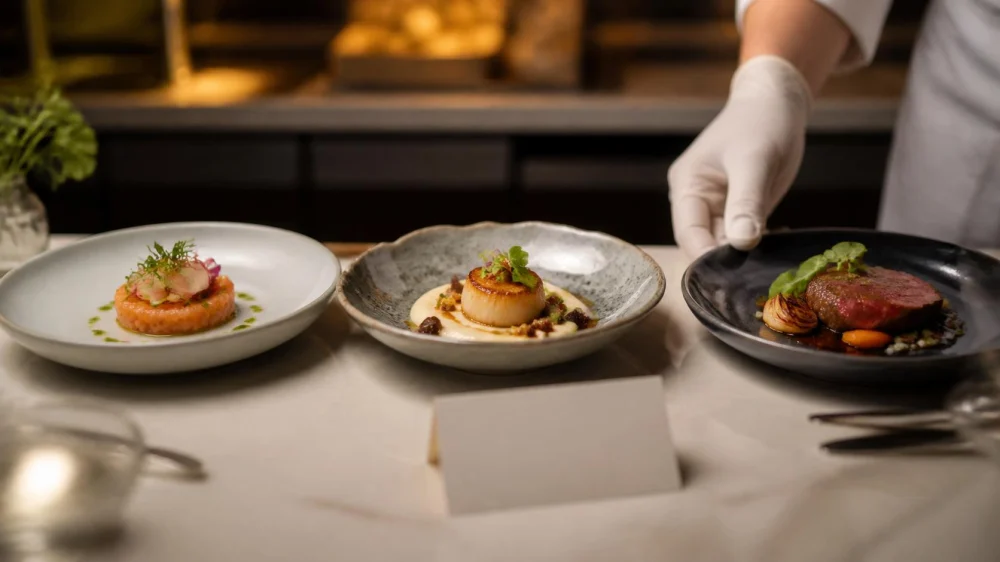
Tasting Menu Dietary Restrictions: Confirm Before Booking
On this page
Quick answer
Tell the restaurant about every allergy and dietary restriction before booking a tasting menu, then ask whether the kitchen can accommodate it across all courses. Confirm cross-contact limits, substitutions, notice deadlines, and cancellation terms in writing. Reconfirm at arrival, but never treat a reservation note as a guarantee that a severe allergen risk has been eliminated.
This guide is for US diners considering a fixed or chef-selected menu. It helps organize a useful conversation; the restaurant must assess its own ingredients, workspace, and service process.
Highkey Rainforest Rooftop / highkey rainforest rooftop photos
New YorkNew York CountyNew York
6 Platt St 29th floor, New York, NY 10038, USA
Why early notice matters
A tasting menu is a sequence of small courses designed to work as a set. Sauces, stocks, garnishes, ferments, and prepared components may be made before service, leaving less flexibility than an à la carte menu. A restriction that sounds like one simple omission can affect several courses.
Advance notice gives the restaurant time to review ingredients and decide whether it can produce a coherent alternative. It also gives you time to choose another restaurant if the kitchen cannot safely or meaningfully adapt. Same-day requests are more likely to result in repeated omissions, rushed decisions, or a refusal.

What to tell the restaurant
Use precise, plain language. Separate medically necessary restrictions from preferences and describe what must be avoided. Useful details include:
- the exact food or ingredient, including related forms that matter;
- whether cross-contact is a concern;
- whether shared fryers, grills, utensils, or preparation surfaces are unacceptable;
- dietary patterns such as vegan, vegetarian, halal, kosher-style, or gluten-free, with the boundaries that apply to you;
- the number of diners affected and whether their restrictions differ;
- the reservation date, seating, and selected menu.
Do not use “a little allergic,” and do not label a dislike as an allergy. Ambiguous language makes it harder for staff to assess risk. If trace exposure can cause a serious reaction, say so directly and ask the restaurant to be candid about its limits.
Questions to ask before paying
- Can every course be accommodated? Ask whether you will receive substitutions or simply fewer components and courses.
- What cross-contact controls are realistic? Shared kitchens may not be able to promise isolation, even when ingredient substitutions are available.
- How much notice is required? Record the deadline for finalizing restrictions and whether changes are accepted afterward.
- Does the whole table need one menu? Some tasting formats require everyone to choose the same sequence or accommodate only a limited number of different menus.
- Are supplements affected? Beverage pairings, snacks, bread, and optional add-ons may contain separate allergens.
- What happens if the kitchen cannot accommodate? Clarify deposit, prepayment, transfer, and cancellation terms before committing.
Ask the reservation agent to add the details to your booking and request a written confirmation. Save the message, but remember that a front-of-house confirmation may still need review by the chef or manager.
Arrival and table checklist
At check-in, state the restriction again and ask the host to confirm it appears on the reservation. When your server introduces the menu, repeat the critical details and listen for a clear description of the accommodation. If the explanation conflicts with the earlier message, pause service and request a manager.
For each uncertain course, ask what it contains and whether it was prepared with shared equipment relevant to your restriction. Avoid passing plates or sharing utensils if that creates cross-contact. If a companion's course looks similar, do not swap dishes without checking; visual appearance does not establish ingredient safety.
When the restaurant says it cannot safely serve a course, accept that boundary. Pressure does not create a safe process. Discuss whether an alternative, omission, reschedule, or refund is available under the booking terms.
Limits and safety notes
No checklist can verify a kitchen from the dining room. Ingredient suppliers change, recipes evolve, and busy shared workspaces introduce uncertainty. People at risk of a severe allergic reaction should follow the emergency plan provided by their clinician and carry prescribed medication as directed. Call emergency services for signs of a serious reaction.
Religious and ethical diets also require specificity. Terms can mean different things to different diners and kitchens. Explain whether ingredients, preparation methods, alcohol, animal-derived stocks, shared equipment, or certification matter to you instead of relying on a single label.
A tasting menu may not be ideal when the kitchen cannot answer confidently, multiple restrictions conflict with core components, or the meal is prepaid with no workable alternative. An à la carte restaurant with simpler preparations can sometimes offer clearer choices, but it still requires direct confirmation.
FAQ
Is a vegetarian tasting menu automatically dairy-free?
No. Vegetarian dishes may contain milk, butter, cheese, eggs, or other ingredients you avoid. State each boundary separately.
Can I add a restriction after paying a deposit?
Ask immediately. The restaurant may be able to adapt with enough notice, but its published deadline and cancellation terms may still apply.
Should I put allergies only in the online booking notes?
No. Use the note, then contact the restaurant directly and obtain confirmation from a person who can check with the kitchen.
Do beverage pairings need a separate check?
Yes. Pairings can include wine, beer, cocktails, fermented drinks, garnishes, or clarifying agents relevant to some restrictions. Ask about both alcoholic and nonalcoholic pairings.
What if staff cannot explain a substitution?
Do not guess. Ask them to pause the course and consult the chef or manager. If the risk remains unclear, the safer choice is not to eat it.
Next steps
Write a one-sentence restriction summary, contact the restaurant before booking, and ask about full-menu accommodation and cross-contact. Save the confirmed plan, recheck it at arrival, and be ready to choose a different experience if the kitchen cannot meet your needs.
Evidence note: This article reflects broad food-service and allergy-safety principles. It does not certify any restaurant, menu, ingredient, or preparation area as safe.





 Leonardo's Deli3.0 (7 reviews)
 It’s a Vibe Nutrition5.0 (20 reviews)
 Grace Chinese4.0 (72 reviews)
 Dunkin'3.0 (548 reviews)
 Connie Cocktail Lounge4.0 (83 reviews)
 Monai’s Soulfood Restaurant4.0 (217 reviews)
 The Best Italian Restaurants for Authentic Pasta and Pizza
 Where to Find the Best French Onion Soup Near Me: A Rich and Flavorful Classic
 How to Plan a Restaurant Meal When You Have Limited Time
 Discovering French Restaurants That Offer Seasonal and Locally Sourced Menus
 How Vegan Restaurants Are Attracting a Younger Audience With Creative Presentation
 How Ice Cream Shops Are Incorporating Global Flavors Into Their Menu