
Restaurant Buffet Safety: Choose Fresh, Well-Held Food
On this page
- Quick answer
- Scan the buffet before serving
- Understand safe holding
- Use serving utensils carefully
- Choose a clean plate each trip
- Ask separately about allergens
- Handle take-home food promptly
- Respond to possible illness
- Restaurant buffet checklist
- Frequently asked questions
- Sources and evidence notes
- Conclusion and next steps
Quick answer
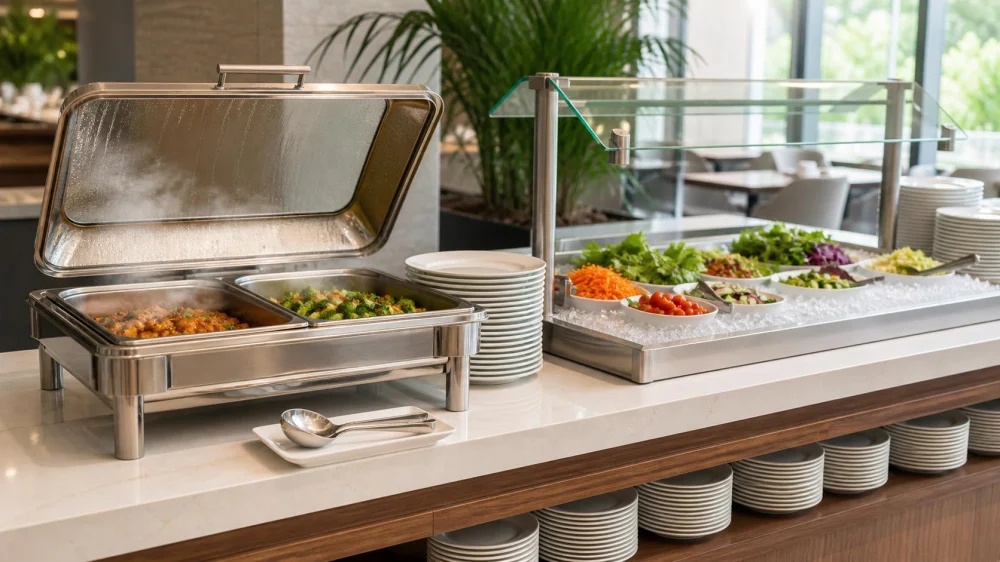
At a restaurant buffet, choose food that is actively held hot or cold, use the utensil assigned to each dish, take a clean plate for every trip, and tell staff when a tray looks depleted, contaminated, or out of position. Do not taste food to decide whether it is safe; harmful bacteria may not change smell, appearance, or flavor.
USDA consumer guidance says hot food should be held at 140°F or warmer and cold food at 40°F or colder. Restaurants operate under applicable state and local rules, often based on an FDA Food Code edition, so diners should report concerns to staff rather than trying to measure or repair the buffet themselves.
Nita's European Bakery / nita bakery queens
40-10 Greenpoint Ave, Sunnyside, NY 11104, USA
Scan the buffet before serving
Look for clean sneeze guards, intact serving dishes, a dedicated utensil in each item, tidy handles, and cold foods over ice or in refrigerated equipment. Hot trays should be in working heated equipment rather than merely sitting over an extinguished burner. Fresh food should replace a tray through the restaurant’s procedure instead of being mixed casually into old remnants.
Skip any dish with a utensil submerged by the handle, visible foreign material, a chipped container, heavy spillover from a neighboring item, or evidence that guests have touched food directly. Tell an employee discreetly and choose another item. Keep children close enough to use utensils and guards correctly.
Rosella's Pizzeria / rosella's pizzeria
New YorkNew York CountyNew York
164 William St, New York, NY 10038, USA
Understand safe holding
Temperature control limits the growth of disease-causing bacteria in perishable foods. USDA’s home and consumer buffet guidance uses 140°F or above for hot holding and 40°F or below for cold holding. It also advises discarding perishable food left at room temperature more than two hours, or one hour when the air temperature is above 90°F.
A restaurant’s regulatory requirements may use different operational limits, time controls, logs, and corrective actions. Surface steam, ice decorations, or a warm plate cannot prove the food’s internal temperature. Ask staff when something seems lukewarm, melted, or no longer chilled; do not insert a personal thermometer into communal food.
Use serving utensils carefully
Use only the scoop, tongs, spoon, or ladle assigned to its tray and return it to the intended holder. Moving utensils between foods can transfer allergens, raw residue, flavors, and microorganisms. Avoid touching the food-contact end or letting it rest on the counter.
Do not use hands to retrieve a dropped item or return food from your plate to a tray. If a utensil falls, notify staff and use a replacement. Hold plates below the sneeze guard opening and avoid reaching across exposed dishes or talking, coughing, or sneezing over food.
Choose a clean plate each trip
Use a new clean plate, bowl, cup, and utensil when returning to the buffet. A used plate can carry saliva and food residue back to serving utensils or surfaces. Follow restaurant signs about trays and plates rather than stacking used ware near food.
Take a portion you can eat and return for more with clean ware. Smaller portions reduce waste and keep personal food from sitting at the table for a long time. Keep raw or cook-to-order items separate from ready-to-eat foods and follow staff directions about cooking stations.
Ask separately about allergens
A clean-looking buffet is not necessarily suitable for a food allergy. Shared utensils, nearby trays, splashes, guests, and back-of-house preparation can create cross-contact. Labels may identify a dish but not every ingredient or shared preparation surface.
Tell a manager or designated staff member about the allergy before serving. Ask whether a separately prepared meal is possible and follow the person’s healthcare plan. Do not rely on removing a topping, choosing from the edge of a tray, or wiping a utensil. If the restaurant cannot provide enough information or control, choose another meal.
Handle take-home food promptly
Many buffets do not permit take-home food; follow restaurant policy. If staff packages an allowed item, refrigerate perishable food within two hours of receiving it, or within one hour when exposed to temperatures above 90°F. Travel time counts, so go directly home or use an appropriate cooler.
At home, divide large amounts into shallow containers, label the date, and follow USDA storage and reheating guidance for the specific food. Discard food when its buffet time or transport history is uncertain. Reheating does not reliably correct every problem caused by improper holding.
Respond to possible illness
Foodborne illness may cause diarrhea, vomiting, abdominal pain, fever, or other symptoms, with onset varying by organism. Contact a healthcare professional for severe, persistent, or concerning symptoms, especially for a young child, older adult, pregnant person, or someone with a weakened immune system.
Seek urgent help for dehydration, bloody diarrhea, high fever, repeated vomiting that prevents fluids, neurologic symptoms, or other emergency signs. Record the restaurant, date and time, foods eaten, dining companions, onset, and receipts. A healthcare or public-health professional can advise on testing and reporting; do not publicly identify a cause based only on timing.
Restaurant buffet checklist
- Check guards, trays, equipment, and overall cleanliness.
- Choose foods held actively hot or cold.
- Use the dedicated utensil for each dish.
- Take a clean plate on every visit.
- Keep hands and used utensils out of serving food.
- Report spills, dropped utensils, and weak holding.
- Discuss allergies before approaching the buffet.
- Take only a reasonable portion.
- Refrigerate permitted take-home food promptly.
- Document and seek care for concerning illness.
Frequently asked questions
Can I tell food is safe by smelling it?
No. Pathogenic bacteria may not change smell, taste, or appearance.
Should hot food be steaming?
Visible steam is not a reliable measurement. Staff should manage holding temperature under the restaurant’s procedure.
Can fresh food be poured onto an old tray?
Restaurants should follow their food-safety procedure. Tell staff if replenishment appears questionable.
Why must I use a clean plate?
It prevents residue and saliva from a used plate reaching shared utensils and food.
Is an ingredient card enough for a severe allergy?
No. Discuss ingredients and cross-contact controls with restaurant staff before choosing.
Can I take buffet food home?
Only if restaurant policy permits it, then chill perishable food promptly and track travel time.
Sources and evidence notes
The U.S. Department of Agriculture Food Safety and Inspection Service’s buffet food-safety guidance supports hot holding at 140°F or above, cold holding at 40°F or below, small replacement platters, and the two-hour limit, shortened to one hour above 90°F. Its take-out guidance covers transport and prompt refrigeration.
Commercial food service follows applicable local regulation and establishment procedures. Diners should raise concerns with staff or the local health department, not intervene in equipment or food handling.
Conclusion and next steps
A safer buffet visit depends on simple observations and clean habits: select well-held food, keep utensils with their dishes, use fresh plates, and speak up about problems. Address allergies before serving, limit time for any permitted take-home food, and seek professional guidance if illness follows.



 Forever Jerk3.0 (322 reviews)
 Mix Platters Halal Boys4.0 (407 reviews)
 G’s Cheesesteaks4.0 (124 reviews)
 Cafe Michelina4.0 (356 reviews)
 Taco Rapido4.0 (114 reviews)
 Baraki4.0 (597 reviews)
 How Brunch Restaurants Are Incorporating Global Flavors to Delight Guests
 Best Doughnuts Near Me: Where to Find the Best Sweet, Fried Delights
 Discovering Barbecue Restaurants That Celebrate Regional Traditions
 Where to Find the Best Apple Pie Near Me: A Sweet, Comforting Dessert You Can’t Resist
 Restaurant Corkage Fee Guide: Bringing Your Own Wine
 How to Find the Best Mac and Cheese Near Me: A Guide to the Best Comfort Food