Dining Alone at a Restaurant: Choose Your Seat, Pace, and Payment
On this page
Quick answer
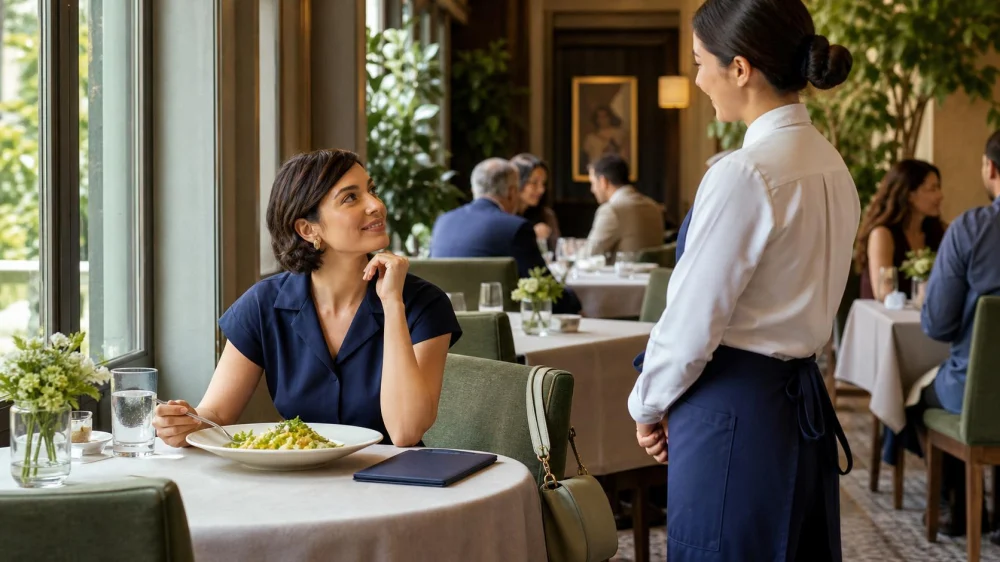
For a comfortable solo restaurant meal, choose a venue and time that match the experience you want, then request a bar, counter, communal, patio, or standard table based on noise, access, view, and service. Tell the server whether you have time constraints or want a relaxed pace. Keep valuables controlled, order portions you can finish or transport safely, and request the check before you are ready to leave.
A table for one is a normal party size. You do not need to apologize, overorder, accept an uncomfortable seat, or rush because the dining room is busy.
Choose the setting
Use current reservation options, menu, hours, service format, and recent diner photos to understand the room. Counter-service restaurants reduce waiting and check timing; full-service dining offers pacing and table attention; bars can be social but louder; cafés may suit reading or laptop use if policy allows.
Consider entrance and parking, neighborhood activity, transit timing, restroom access, lighting, noise, kitchen closing time, bar age restrictions, minimum spend, and reservation rules. If you want quiet, avoid event times and live music. If conversation is welcome, choose a counter or communal seat where interaction is natural rather than forced.
Airways Pizza Restaurant / airways pizza
90-13 Astoria Blvd, East Elmhurst, NY 11369, USA
Ask for the right seat
- State “one person” clearly and mention a reservation name if applicable.
- Request a seating type, not a vague “good table”: standard chair, low table, counter, away from speakers, near an exit, or on an accessible route.
- Ask before accepting a stool if back support, height, balance, or bag storage matters.
- Check hooks and floor space before placing a bag; keep phone, wallet, keys, and identification on your person.
- Do not occupy an extra aisle, chair, or neighboring place with belongings when a safer option is available.
- If the seat is uncomfortable or unsafe, ask to move before ordering.
A seat near staff is not guaranteed security. Stay aware of drinks, belongings, exits, and transportation without turning the meal into surveillance.
Set the pace
Tell the server about a fixed departure time before ordering, especially if choosing multiple courses. Ask which dishes fit the available time and whether the kitchen can pace courses accordingly. For a slower meal, say that you are not in a rush and ask how to signal the next course.
Order in stages when portions or appetite are uncertain. A starter and one entrée may be more manageable than several dishes designed for sharing. Ask about half portions, sides, or takeaway suitability. Keep reading, journaling, or phone use within the restaurant’s table policy, and remain available for necessary service communication.
Pay and leave smoothly
Request the check with enough time to review it. Match items, prices, fees, discounts, tax, and tip options, then keep the receipt until payment posts. If you used a coat check, valet, charger, restroom code, or stored item, retrieve it before transportation arrives.
Package leftovers only if they can be chilled or transported within appropriate food-safety limits. Check your seat, under the table, hooks, charging points, restroom, and payment terminal for belongings. Arrange the ride from a visible safe area and avoid announcing private travel details to nearby strangers.
Solo dining checklist
- Venue, service style, hours, and desired atmosphere matched
- Arrival, departure, and transportation planned
- Specific seat and access needs requested
- Valuables kept on person or securely controlled
- Time constraint or relaxed pace told to server
- Portions matched to appetite and transport
- Bill reviewed before payment
- Seat, hooks, restroom, and charging point checked before leaving
Limitations
Restaurant policies, local safety conditions, accessibility, alcohol service, table use, and transportation vary. This guide cannot assess a particular venue or neighborhood. Trust immediate safety concerns, seek staff help, and call emergency services when necessary.
FAQ
Will I be seated only at the bar?
Not necessarily. Ask for the seating type you prefer; availability and reservation policy apply.
Is it rude to take a table for two?
No. Follow the host’s seating plan and keep belongings from using additional seats unnecessarily.
Can I bring a book or laptop?
Ask about the venue’s policy and avoid blocking service, outlets, or peak-time table turnover.
How do I avoid a rushed meal?
Choose an appropriate time and service style, tell the server your preferred pace, and order in stages.
What if someone bothers me?
End the interaction, move toward staff, ask for help or a different seat, and leave or contact emergency services if unsafe.
Evidence notes
Useful evidence for a solo-dining decision includes the current reservation system, service format, room layout, accessibility information, menu and hours, restaurant policy, direct staff confirmation, and a personal transportation plan. Reviews can suggest questions but cannot guarantee a particular seat, noise level, or safety condition.
Conclusion
Solo dining becomes easier when you choose intentionally. Match the room to your goal, request a precise seat, communicate pace, keep possessions controlled, review payment, and leave on your own timetable.




 Wingstop4.0 (39 reviews)
 Healthy Food Asian Cuisine4.0 (31 reviews)
 La Lupe Cantina4.0 (543 reviews)
 Chaotic Good Cafe4.0 (144 reviews)
 Fresh Food Corner3.0 (32 reviews)
 HAGS4.0 (115 reviews)
 Where to Find the Best Moussaka Near Me: A Greek Comfort Food You Should Try
 Discovering Ice Cream Shops That Combine Classic and Modern Flavors
 How Pizza Restaurants Are Attracting Food Enthusiasts With Unique Combinations | Dine Droop
 Discovering French Restaurants That Offer Authentic Regional Cuisine
 Exploring Ice Cream Shops That Highlight Natural Ingredients and Sustainability
 Where to Find the Best Sushi Rolls Near Me: A Guide to the Best Sushi in Town