
Restaurant Split Checks: Ask Before Everyone Orders
On this page
Quick answer
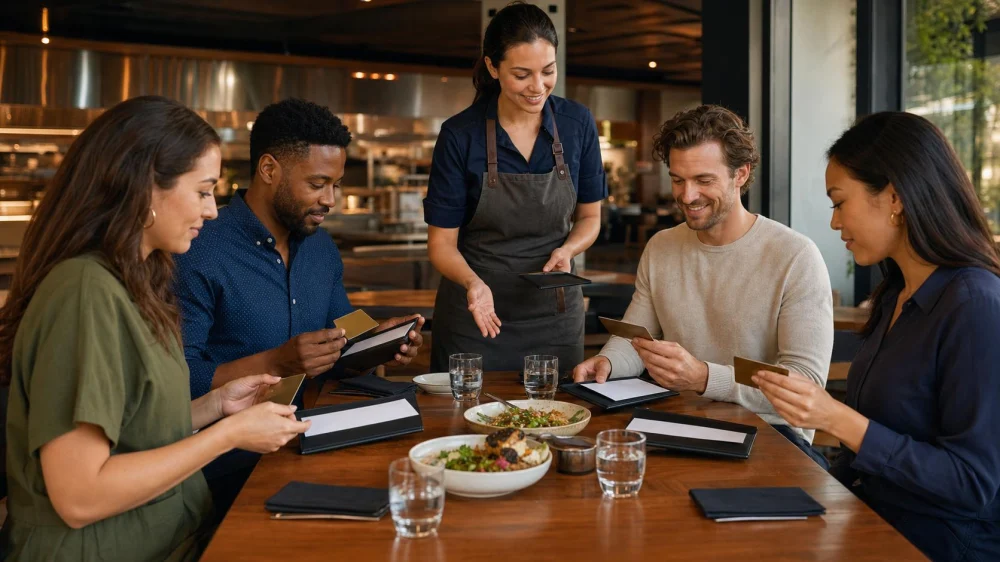
Ask about separate checks when booking or before the first order, not after dessert. Tell the restaurant the group size, number of checks, whether couples or families will pay together, and how shared dishes should be assigned. Confirm any maximum number of cards, automatic gratuity, service charge, deposit, minimum spend, or payment deadline.
At the table, keep seats stable and state shared-item plans when ordering. Before paying, review every subtotal, tax, fee, credit, and gratuity line. If the restaurant cannot split checks, choose one payer and use a private reimbursement plan that the group agrees to before dining.

The Office of Mr. Moto / mr moto nyc
New YorkNew York CountyNew York
120A St Marks Pl, New York, NY 10009, USA
Decide what “split check” means
Guests often use one phrase for several different requests. Define the arrangement clearly:
- Separate checks by person: each guest pays for items assigned to their seat.
- Separate checks by household: couples or families combine their seats.
- Equal split: the final total is divided into equal shares, regardless of individual orders.
- Itemized custom split: certain dishes are divided among named guests while other items remain individual.
- One check, multiple cards: one bill is paid with several cards by fixed dollar amounts or percentages.
These are not interchangeable in a point-of-sale system. A restaurant may support one method but not another, especially during busy service or for a large party.
Anassa Taverna Astoria / anassa restaurant
28-10 Astoria Blvd, Astoria, NY 11102, USA
Ask the restaurant at the right time
For a reservation, call or use the restaurant's official booking channel. Ask a short, operational question: “We have eight guests and need four household checks. Can your team do that for this reservation?” Record the answer and any conditions in the reservation notes.
For a walk-in group, ask the host before seating and repeat the plan to the server before ordering. Do not assume the answer from an old review, a different location, or a previous visit; policies and systems change.
Large parties, private rooms, tasting menus, ticketed events, deposits, and prix fixe meals may have special payment rules. Confirm the deadline for reducing the guest count and how a deposit will be credited across checks.
Map guests, seats, and shared items
Once seated, avoid changing places without telling the server. If the restaurant uses seat numbers, stable seating helps the system keep orders together. One guest can be the group's payment coordinator and quietly track households or pairs.
Discuss shared items before ordering. Decide whether an appetizer belongs to one host, one household, the people who requested it, or the whole group. State the decision while ordering rather than asking the server to reconstruct who ate what later.
Birthday desserts, bottles, corkage, extra sides, add-ons, and takeout items often cause confusion. Name the payer when adding them. If one guest is treating the table, clarify whether the treat includes beverages, tax, fees, and gratuity or only food.
Account for tax, fees, and gratuity
A split subtotal is not the final obligation. Review sales tax, automatic gratuity, service charges, delivery or room fees, cake-cutting or corkage fees, and discounts. Ask what each unfamiliar line means before adding another tip.
Do not assume a service charge is distributed to staff in the same way as a voluntary tip. The menu, receipt, or restaurant representative may explain the establishment's policy. Local disclosure and wage rules vary, so avoid making legal conclusions from the label alone.
When a percentage discount or gift card applies to the full table, ask how the system allocates it. If guests are calculating reimbursements themselves, agree whether shared tax and gratuity follow each person's subtotal or are divided another way.
Handle cards, cash, and payment apps
Bring a working payment method even if another guest plans to reimburse you. Restaurants may limit the number of cards, decline split-tender transactions, or require the physical card used for a deposit. A mobile wallet or payment app between friends does not guarantee the restaurant accepts that app.
If several cards will pay one check, write each amount clearly only when staff requests it and verify that the amounts cover the total. Keep cards with their owners and collect receipts before leaving. Never photograph or post a receipt that exposes card details, names, barcodes, or reservation information.
For cash, include enough small bills to avoid asking the server to make many separate changes. Count discreetly, keep the payment together, and confirm whether cash and card can be mixed.
Solve common end-of-meal problems
If an item is on the wrong check, identify the item, correct payer, and affected checks in one request. Give staff time to void and rerun transactions; repeated changes can create duplicate pending authorizations.
If a card is declined, the cardholder should provide another payment method and resolve the account privately. Do not ask staff to diagnose a bank decision. If a guest leaves early, settle that check before departure or transfer responsibility with the restaurant's agreement.
If the restaurant cannot perform the requested split, pause and choose a fallback instead of arguing at closing time. One payer can settle the bill while the group calculates reimbursements from an itemized receipt. Confirm transfers before everyone disperses, but never delay staff beyond reasonable payment time.
Frequently asked questions
Is splitting a check always allowed?
No. Restaurant policies, systems, event formats, group sizes, and staffing differ. Ask the specific location for the specific reservation.
Should we split equally or by item?
That is a group decision. Equal splitting is simple but may feel unfair when orders differ significantly. Decide before ordering so guests can choose comfortably.
Can a restaurant split one shared dish four ways?
Some systems can; others cannot. Assigning the dish to one check and reimbursing that payer may be easier.
What if somebody does not use payment apps?
Choose cash, a bank-supported method the person accepts, a separate restaurant check, or another plan before the meal. Do not pressure guests to install an app at the table.
How do refunds work after split payment?
Ask the restaurant. A correction may need to return to the original payment method and pending authorizations can take time to update.
Practical notes and limitations
This guide describes dining coordination, not tax, wage, banking, or consumer-protection law. Fees, gratuity practices, card rules, and receipt requirements vary by jurisdiction and establishment. Use the current menu, reservation terms, posted notices, itemized receipt, and direct confirmation from the restaurant.
Be considerate of staff and the rest of the dining room. A clear plan at the beginning usually requires less time than a complicated reconstruction at the end. Accessibility needs, language needs, and privacy concerns can be raised when booking so the restaurant can explain available options.
Next steps
Message the group with one sentence: number of checks, treatment of shared items, and backup payer. Then call the restaurant to confirm card limits, large-party charges, and deposit handling. At the table, repeat the plan before ordering and review the complete receipt before approving payment.






 Sabor Dominicano4.0 (103 reviews)
 Dunkin'3.0 (197 reviews)
 Sushi King4.0 (174 reviews)
 CakeBurgers4.0 (261 reviews)
 Fred's Meat & Bread by Wonder2.0 (28 reviews)
 Auntie Anne's4.0 (5 reviews)
 The Best Food and Wine Pairings at Restaurants Near Me: Expert Tips for a Perfect Match
 How Ice Cream Shops Are Using Seasonal Ingredients to Stand Out
 Best Middle Eastern Restaurants for Seasonal Specials and Unique Flavors
 Discovering French Restaurants That Offer Authentic Regional Cuisine
 Best Taco Bars Near Me: Where to Get the Most Flavorful Tacos in Town
 Best Local Wine Bars Near Me: Sip Local Wines in Great Atmospheres